



Official Website of the
Catholic Diocese of Little Rock
Memorial of Saint Anthony, Abbot
Published: January 17, 2026
Bishop Anthony B. Taylor preached the following homily Jan. 17, 2026.
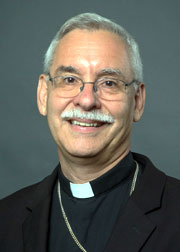
Bishop Taylor
You and I know many brave and selfless people, for example, police officers, firefighters and soldiers who risk their lives to overcome evil and ensure our safety.
But have you noticed that doctors and nurses are also brave? Every day they treat people with contagious diseases — many of the victims of the Ebola virus were doctors who contracted this incurable disease from their patients. It takes courage to endure repulsive odors, the sight of clotted blood, the screams of badly wounded people, the innocent and not-so-innocent victims of violence and revenge — and the explosive emotions of their traumatized families, often directed against the very doctors who are doing everything they can to help.
There has been amazing scientific progress in recent years, but medical skill alone is not enough. Much courage is also required.
There has been amazing scientific progress in recent years, but medical skill alone is not enough. Much courage is also required.
Jesus is the greatest physician in all of history. He healed physical ailments and wounded souls, preached conversion, forgave sins and restored former sinners to society, of which we have a good example in today's Gospel.
Levi (also called Matthew, the same one who wrote the Gospel according to St. Matthew) was a tax collector, a collaborator with the cruel and hated Roman occupation — so his people considered him a traitorous and greedy man who wanted to enrich himself by exploiting his own people, similar to the French collaborators with the Nazis during World War II. And today Jesus invites him to be a collaborator of another kind, to follow him and collaborate with him in his great work of mercy, to do from now on everything he could to help save those who were lost, as he himself once was.
Jesus must have had great courage to invite Levi and many other unpleasant and hated people to follow him — the Gospel says that a good number of tax collectors and other sinful people came to him. And how did Jesus defend himself? By telling them that he is a doctor of souls and that these people have sick souls: it is not the healthy who need a doctor, but the sick. Jesus had the courage to risk his own reputation if necessary to heal his patients.
To be collaborators with Jesus, we must also be courageous, so that we may advance in our time the great work of divine mercy. And where to begin? Perhaps with the corporal works of mercy: feeding the hungry, giving drink to the thirsty, clothing the naked, visiting the imprisoned, sheltering the homeless, visiting the sick, and burying the dead — and the spiritual works of mercy: instructing the ignorant, counseling the doubtful, comforting the sorrowful, patiently bearing wrongs, forgiving offenses, admonishing sinners and praying for the living and the dead.
Once we do these things, I assure you that the Lord will continue to open our eyes to see even more works of mercy that need to be done, because then we will have become a doctor — or at least a nurse — of souls, a physician of the spirit, a close and courageous collaborator of Jesus in his great work of mercy in a world where many still have sick souls and desperately need healing from you and the Lord.